

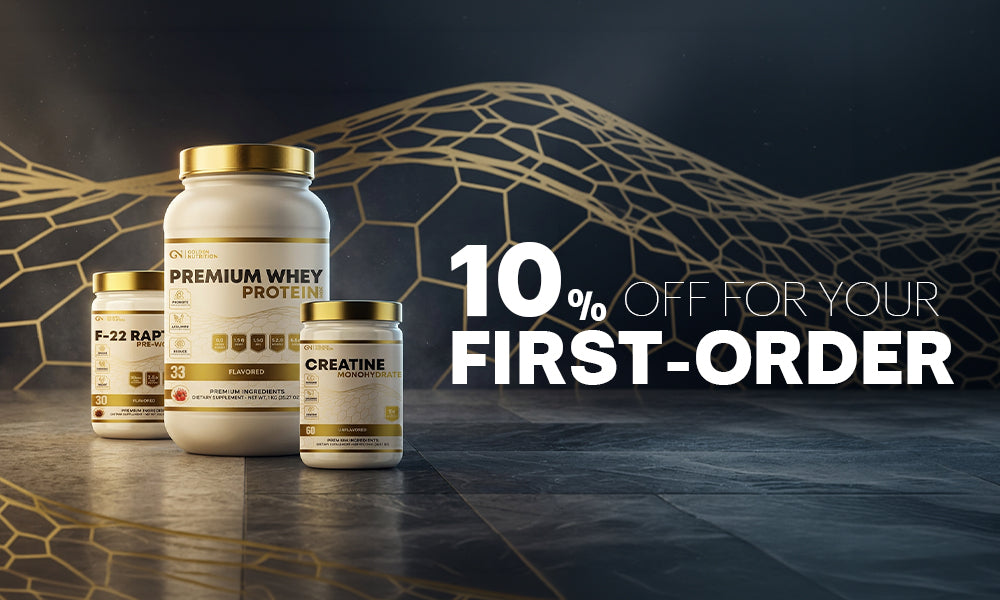
If your goal is to increase strength, lift heavier weights, and improve overall training performance, Creatine is one of the most effective and well-researched supplements in sports nutrition. Unlike stimulants or pre-workouts, creatine does not directly boost energy in the moment — instead, it improves your body's ability to produce and recycle energy during high-intensity exercise.
What Is Creatine?
Creatine is a naturally occurring compound found in small amounts in foods like meat and fish, and it is also produced by the body. It is stored mainly in the muscles as phosphocreatine, which plays a key role in regenerating ATP (adenosine triphosphate) — the primary energy source used for short, explosive movements such as weightlifting and sprinting.
How Creatine Increases Strength and Power
During high-intensity exercise, the body rapidly uses ATP for energy. However, ATP stores are limited and deplete quickly. Creatine helps by increasing phosphocreatine stores in the muscles, which allows faster regeneration of ATP during training. This leads to:
- Increased strength output
- Improved explosive power
- Better performance in short, high-intensity sets
- Higher training volume over time
In simple terms: More creatine → More ATP regeneration → More strength and power.
How Creatine Supports Muscle Growth
Although creatine does not directly build muscle like protein, it supports muscle growth indirectly by improving training performance. By allowing you to lift heavier weights and perform more repetitions, creatine increases overall training stimulus, which leads to greater long-term muscle growth. It may also help by increasing muscle cell hydration, improving training intensity, supporting recovery between sets, and enhancing workout consistency.
Creatine and Water Retention in Muscles
Creatine increases water content inside muscle cells, a process known as cell volumization. This effect is not fat gain — it is intracellular hydration that can improve muscle fullness, support a more anabolic environment, and enhance overall muscle appearance.
Types of Creatine
The most studied and effective form is Creatine Monohydrate. Other forms exist, but monohydrate remains the gold standard due to its effectiveness, safety, and affordability.
How to Use Creatine
Creatine works through saturation, not timing, so consistency matters more than exact timing.
- Standard effective dosage: 3–5 g daily of creatine monohydrate
- Optional loading phase (not required): 20 g per day, split into 4 doses for 5–7 days, then continue with 3–5 g daily
It can be taken daily (training and rest days), at any time, with or without food.
When Do You Need Creatine? (5 Key Signs)
- You train for strength or muscle building
- You struggle with progressive overload
- You want more explosive power in workouts
- You perform high-intensity resistance training
- You want to improve training consistency and volume
Key Takeaway
Creatine is one of the most scientifically proven supplements for improving strength, power, and overall workout performance. By increasing phosphocreatine stores and enhancing ATP regeneration, it lets you train harder, lift heavier, and build muscle more effectively over time.
Leave a comment
This site is protected by hCaptcha and the hCaptcha Privacy Policy and Terms of Service apply.